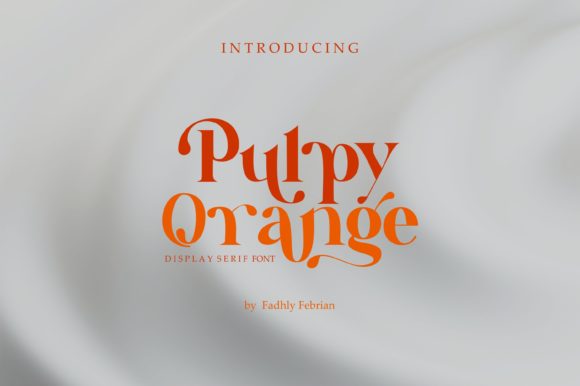
Pulpy Orange: A Modern Serif Font for Web Design
It was a late afternoon when I first tested Pulpy Orange in the hero section of a boutique online store. The font had just arrived in my design toolkit, and I needed to see how it would behave on screen. As I placed it over a soft gradient background, something clicked—this wasn’t just another serif font; it felt like a breath of fresh air in the world of digital typography.
Pulpy Orange is a modern serif font with a warm, approachable personality that feels both refined and playful. Its curves are gentle, its weight balanced, and its overall style exudes a sense of charm that’s perfect for branding, logos, and creative web projects. What stood out immediately was how well it paired with other fonts without clashing or overpowering them.
Visual Appeal and Digital Performance
As a web designer, I always look for fonts that perform well across devices. Pulpy Orange didn’t disappoint. On mobile screens, it remained legible even at smaller sizes, which is crucial for responsive layouts. The character spacing felt intentional, making it ideal for headlines and call-to-action buttons. It had enough personality to stand out but not so much that it became distracting.
I tested it on a landing page for a course sales site, placing it in the main headline and subheadings. The result was clean and inviting. Users could easily scan through the content without feeling overwhelmed. The font’s subtle serifs added a touch of elegance that elevated the overall brand feel without compromising readability.
Real-World Use Cases and Layout Ideas
Pulpy Orange shines in several key areas of web design. For instance, it works beautifully as a header font for portfolio sites, where it can add a unique flair to project titles. In an online shop, it can be used for product banners or promotional sections, giving the brand a cohesive and professional look.
One of my favorite uses was integrating it into a blog redesign. I paired it with a clean sans serif font for body copy, creating a visual hierarchy that guided users naturally through the content. The contrast between the two fonts helped emphasize important sections while maintaining a harmonious aesthetic.
For digital ads or campaign pages, Pulpy Orange adds a touch of creativity without sacrificing clarity. It’s especially effective for short phrases or taglines that need to grab attention quickly. I found it particularly useful in image overlays, where it maintained good contrast against various background colors and textures.
Readability and Accessibility Considerations
While Pulpy Orange is a decorative display font, it still maintains strong readability. However, it’s best suited for short text rather than long paragraphs. I avoided using it for navigation menus or form labels, as those require more straightforward, easy-to-read typefaces.
On dark backgrounds, the font performed well, though I made sure to test it with sufficient contrast. For accessibility, I always recommend pairing it with a high-contrast color palette and ensuring that there’s enough space between characters and lines of text.
Font Pairing and Brand Consistency
When it comes to font pairing, Pulpy Orange plays nicely with a range of styles. For a more modern look, I paired it with a minimalist sans serif like Helvetica Neue. This combination worked well for a coaching website, offering a balance between creativity and professionalism.
If you’re aiming for a more editorial feel, consider pairing it with a simple serif font like Georgia. This creates a cohesive and elegant design that’s perfect for blogs or news sites. For a bolder statement, a script font can add a personal touch, though I’d use that sparingly to avoid overwhelming the layout.
Before finalizing any project, I always check the font’s included styles, weights, and alternates. Pulpy Orange offers enough variation to support different design needs, and its PUA encoding makes it easy to access special characters and ligatures when needed.
For web designers and digital creators, commercial licensing is also an important consideration. Make sure to review the font’s terms before using it in client projects, online stores, or branded assets to ensure compliance and avoid legal issues.
In the end, Pulpy Orange proved to be a versatile and reliable choice for a wide range of digital design scenarios. Whether you're working on a landing page, a portfolio, or an online shop, this font brings a unique warmth and character that can enhance your brand’s visual identity without compromising usability or performance.